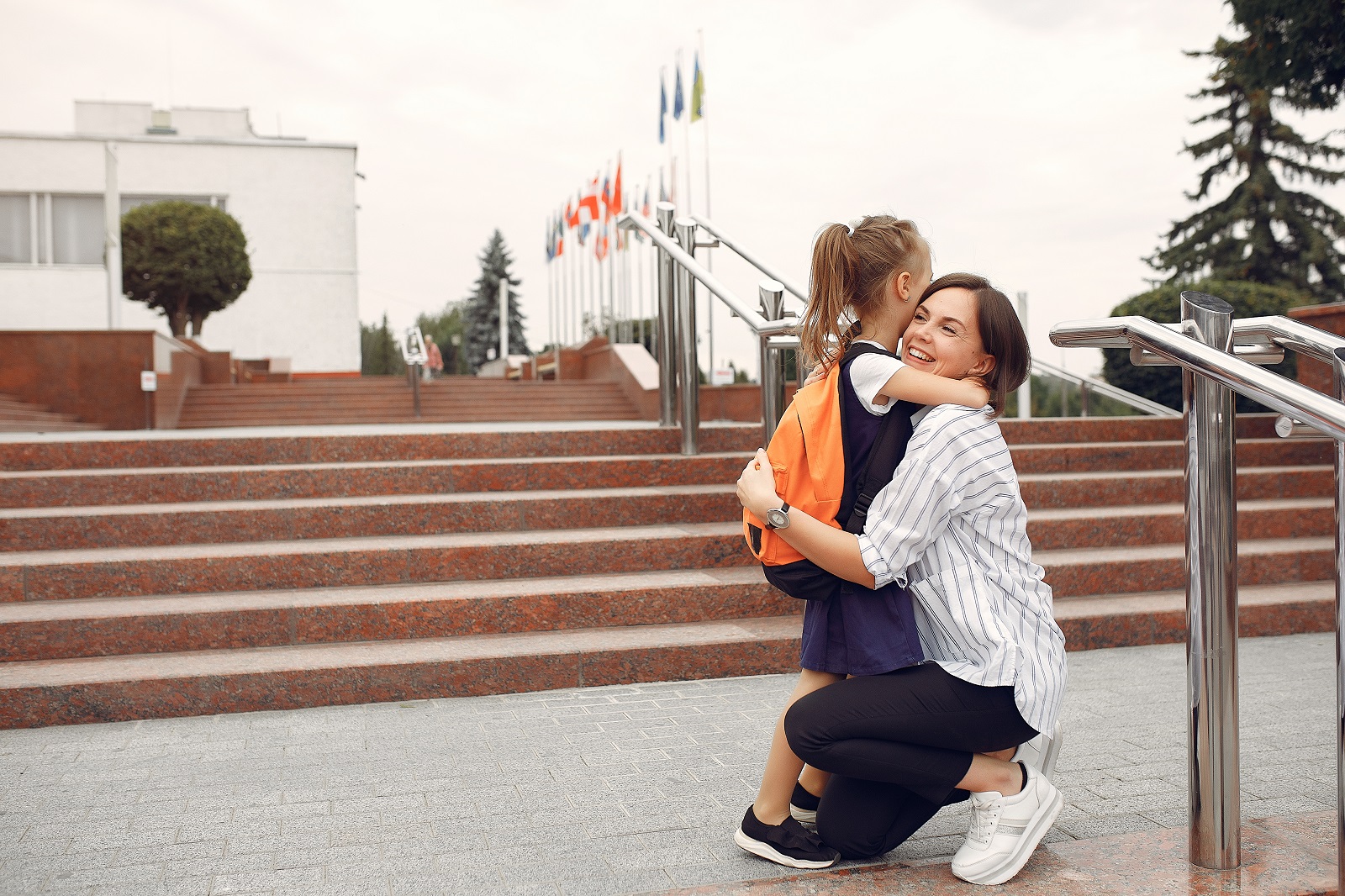
Starting school is a major change for both the child and the family, and when this happens in a new country, it can become an additional source of stress and concern about how the child will cope.
Schools in Croatia are prepared to welcome pupils from other countries by offering preparatory Croatian language classes, and teachers and support staff are trained to help children adapt and integrate into the learning process in a new language.
There is a great deal you can do as a parent to help your child get ready for school – by preparing them mentally and emotionally (and yourself too), getting their school supplies and equipment ready, setting up a dedicated space at home for homework and studying, and familiarising your child with the school building and the route from home to school.
Emotional preparation for starting school
By enrolling in school, your child has already reached a certain level of emotional and intellectual maturity, but starting school is still a big transition, so it I is important to start preparing them for the changes ahead.
It is essential to talk about school often, casually, during everyday conversations with your child. The tone and manner in which you speak about school can shape your child’s attitude toward it – helping them see it positively, feel excited about it, and accept the transition more easily.
Here are some tips on how to do this:
● Talk about your own school days, highlighting friendships, the teacher who became an important figure in your life, and the joy of learning new skills and knowledge.
● Never scare your child with talk about the teacher, school, or responsibilities.
Your child is unlikely to be motivated or enjoy school if it is portrayed as a place where a "scary" teacher gives bad marks and everything is just work, duty, and discipline.
● Teach your child how to compare and evaluate.
Encourage self-comparison: make a gallery of their drawings or creations and compare how they have progressed over time. Speak positively about the differences between children – one may draw better, another dances well, someone else may be taller...
There is no need to fear comparisons as long as your love and attention are not conditional on your child being the best. Show your child that you love them just the way they are, and teach them that practice and effort lead to improvement.
● Play lots of games with your child, especially board games that involve learning rules and taking turns. These games help children learn to accept both winning and losing. Remember, play – however simple it may seem – is one of the best preparations for school.
Practical preparation for starting school
Alongside boosting your child’s confidence and making school seem like an exciting adventure, your role as a parent includes helping them develop a higher level of independence than they have previously had.
For example, if your child has not yet mastered using the toilet independently, dressing and undressing, tying shoelaces, or helping themselves to food and drinks, it is important to practice these skills before school begins.
It is also helpful to walk the route to school several times over the summer, especially if your child will eventually go alone. Even if you will accompany them each day, knowing the route, including any roads they will need to cross, and learning how to do so safely with your guidance, is essential.
As a parent, you will also need to make some practical decisions.
If all the adults in your household work and there is no family member at home to care for your child after school, now is the time to decide whether your child will attend extended day care or if someone else will look after them.
If you plan for your child to stay home alone, make sure there is a reliable adult who can help if needed, and ideally who can accompany them to and from school during the first weeks.
Once you have decided how to manage the time between the end of school and your return from work, inform your child about the upcoming changes, introduce them to the people who will look after them, and ensure they are safe at home if they will be alone (with occasional supervision). Display important phone numbers in a visible spot and identify people they can turn to in case of an emergency (a neighbour or the parent of a school friend).
Most primary schools in Croatia offer extended day care for younger pupils. This allows children to stay under teacher supervision after lessons, complete their homework, eat lunch, play, and socialise until their parents finish work. Be sure to ask your school about this option.
Extra support for children who don’t speak Croatian
If your child has not previously attended any programme where they could learn basic Croatian, your main task in easing their school transition will be helping them learn simple Croatian words and expressions to help with everyday communication with staff and classmates.
Picture books and illustrated dictionaries can be great tools for this.
The first days of school are special moments!
Make sure to be available and dedicate time to your new pupil. Take them to school and pick them up in those early days, get to know their classmates and their parents, and show your pride and happiness about this new milestone in their life.
*Extended day care is a programme for younger primary school children in Croatia where they stay under the guidance of their classroom teacher until the end of their parents’ workday (up to 4pm). Children can complete homework, play, socialise, and eat meals. Care is also available before lessons begin, if parents start work early (if you, for example, start working before 8 a.m. and you do not wish to leave your child home alone), and it ends at 4 p.m. Extended day care involves a fee, but parents pay only a portion depending on household income per family member.


 0
0


 English


